For Wild Tree Woodworks, the brand has to feel as considered as the craft itself: grounded, natural, and premium—without losing approachability. This style guide was designed to help the brand stay consistent across everyday touchpoints (web, print, social, proposals) while giving the team enough flexibility to work quickly and confidently.
What this project highlights
A brand system that’s clear, usable, and easy to maintain
A style guide only works if people actually use it. This one is intentionally straightforward—built around the core decisions teams need most often:
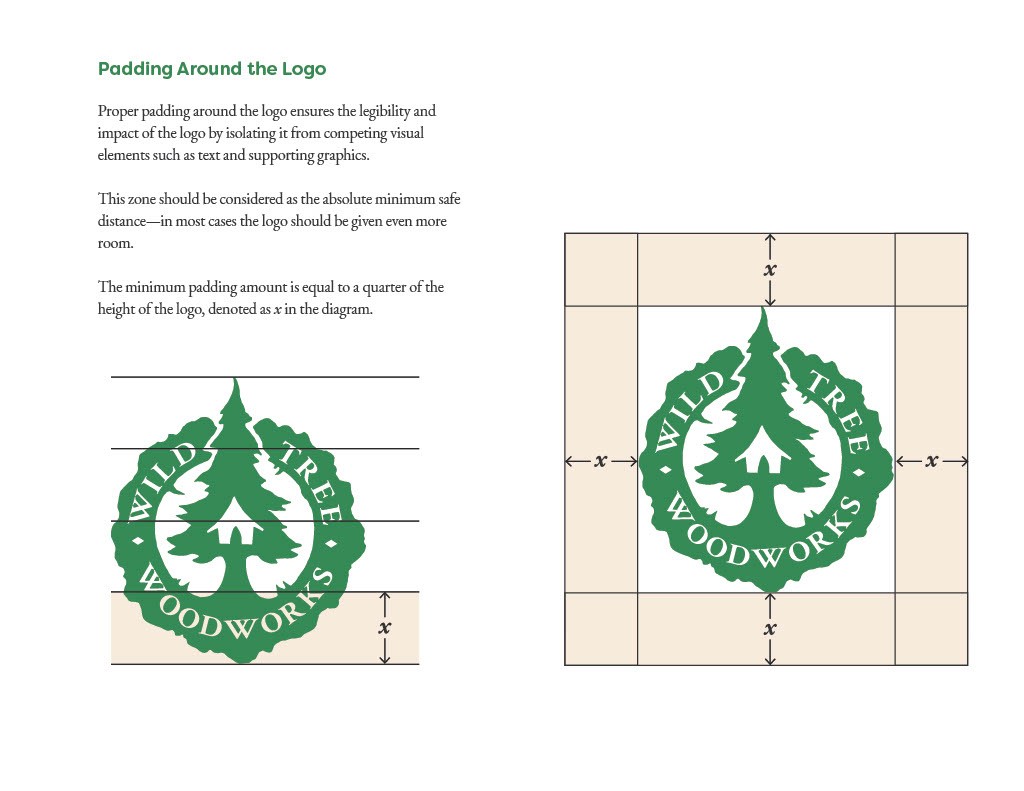
Logo usage rules, including clear space and padding guidance to protect legibility
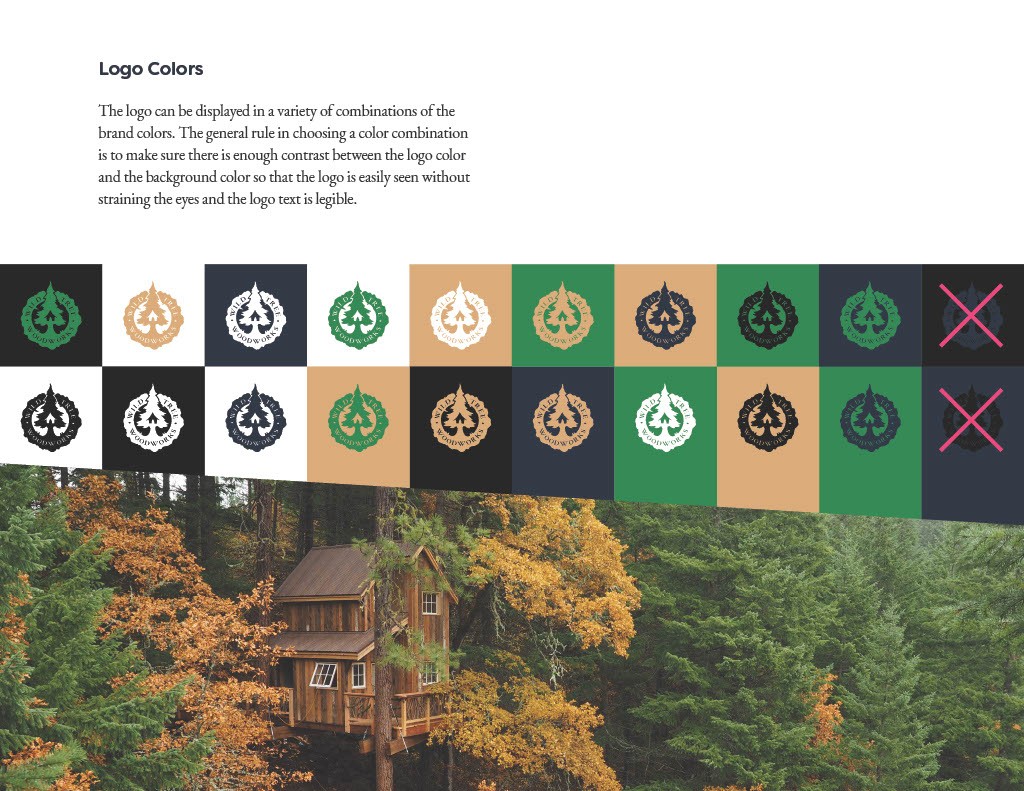
Logo color configurations designed to maintain contrast and readability across backgrounds
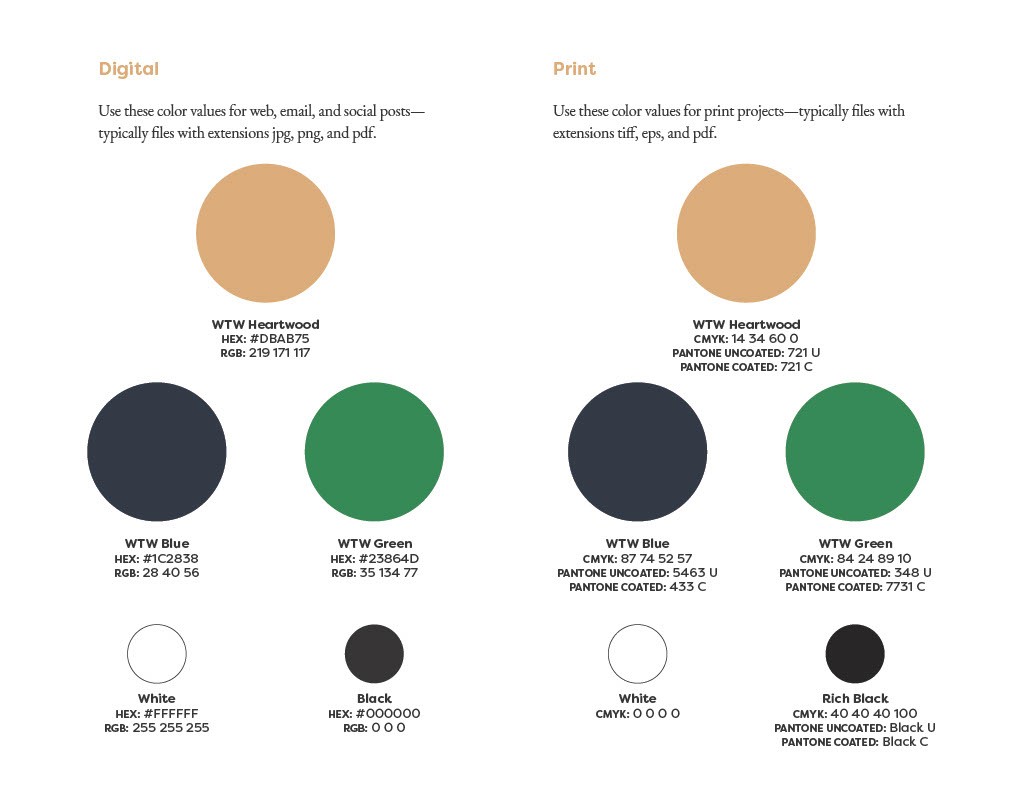
Color palette specifications for both digital and print use
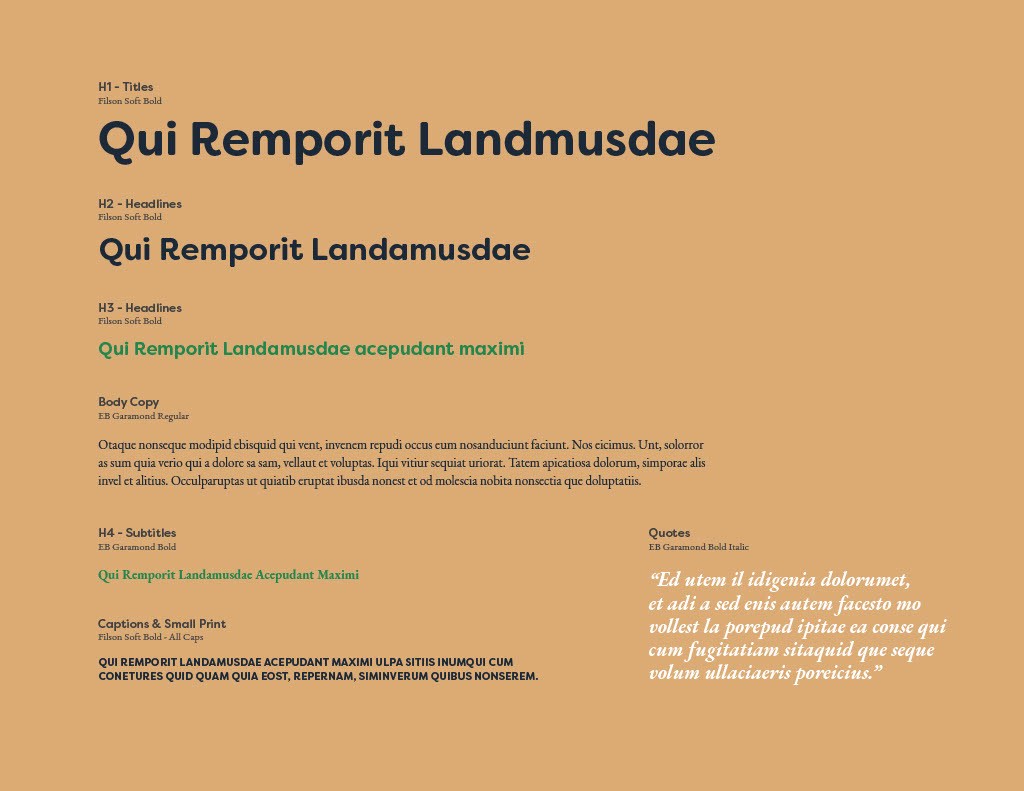
Typography hierarchy with defined roles for headlines, body copy, quotes, and supporting text
Design considerations and craft
Protecting the mark
The guide defines minimum spacing around the logo to keep it readable and visually strong in busy layouts—especially important for small teams working across mixed formats.
A palette that feels outdoorsy—but controlled
The colors balance natural warmth with a deep, grounded blue to provide contrast and structure, creating a system that feels both organic and intentional.
Typography that reinforces “crafted + classic”
The type system pairs sturdy, character-forward display typography with a more traditional serif for readability and tone—creating a hierarchy that works across marketing, editorial, and branded materials.
Protecting the mark
The guide defines minimum spacing around the logo to keep it readable and visually strong in busy layouts—especially important for small teams working across mixed formats.
A palette that feels outdoorsy—but controlled
The colors balance natural warmth with a deep, grounded blue to provide contrast and structure, creating a system that feels both organic and intentional.
Typography that reinforces “crafted + classic”
The type system pairs sturdy, character-forward display typography with a more traditional serif for readability and tone—creating a hierarchy that works across marketing, editorial, and branded materials.
Guidance without being precious
The “Dos & Don’ts” section is written as a practical reference—protecting core brand integrity while acknowledging that real-world usage often requires flexibility.
Why this matters
This work is less about making a polished PDF and more about demonstrating brand governance: translating a visual identity into rules, guardrails, and repeatable decisions that keep output consistent across channels—without slowing teams down.